
Lamont and the EI host a wide collection of regular seminars and events. Follow the below links to our various seminar, colloquia and events pages. The most recent news and events related to our group are also provided in the regularly updated list of links on this page.
News
PaleoDynamics lab member, Hun Baek, has successfully defended his doctoral thesis titled "Hydroclimatic Black Swans: Characterization of the Oceanic and Atmospheric Drivers of Spatially Widespread Droughts in North America." Hun has been incredibly productive while a student in our lab and the papers embodied in his thesis, along with his additional efforts, can all be found in the below links. Congrats to Dr. Baek and good luck on the next phase of his journey as a Flint Postdoctoral Fellow at Yale University, working with Juan Lora.
Baek, S.H., J.E. Smerdon,…
Scientists have filled a gaping hole in the world’s climate records by reconstructing 600 years of soil-moisture swings across southern and central South America. Along with documenting the mechanisms behind natural changes, the new South American Drought Atlas reveals that unprecedented widespread, intense droughts and unusually wet periods have been on the rise since the mid-20th century. It suggests that the increased volatility could be due in part to global warming, along with earlier pollution of the atmosphere by ozone-depleting chemicals. The atlas was published this week in the…
Climate change is the defining issue of this century. Students have shown unprecedented levels of civic engagement in climate activism and understand that they will inherit a world that has felt the impact of climate change. Educators must be prepared to bring climate change into the classroom, and the Earth Institute is excited to support these efforts through our professional development event for K-12 educators, “E.I. Teach: Climate Change in the Classroom” from July 28-31. This newly launched effort will enable educators to provide engaging and meaningful learning opportunities for students…
After nearly two decades of declining water flows into the Colorado River Basin, scientists have decided the word drought doesn’t cut it anymore. We need different terms, they say, to help people fully grasp what has happened and the long-term implications of climate change — not just in the Southwest, but across the country.
The term that’s caught the most attention lately is “megadrought.” Read More
On behalf of the Earth Institute, we are writing to reaffirm the statements shared by President Bollinger, and Executive Vice President for University Life, Suzanne Goldberg, together with Vice President for Student Affairs for University Life, Joseph Greenwell, regarding the senseless killings of black Americans in the U.S. — George Floyd, Breonna Taylor, Ahmaud Arbery, and the tragically long list of those before them. These killings speak to the institutionalized racism that continues to plague this country and justify the anger and fury in the ensuing protests. We express empathy…
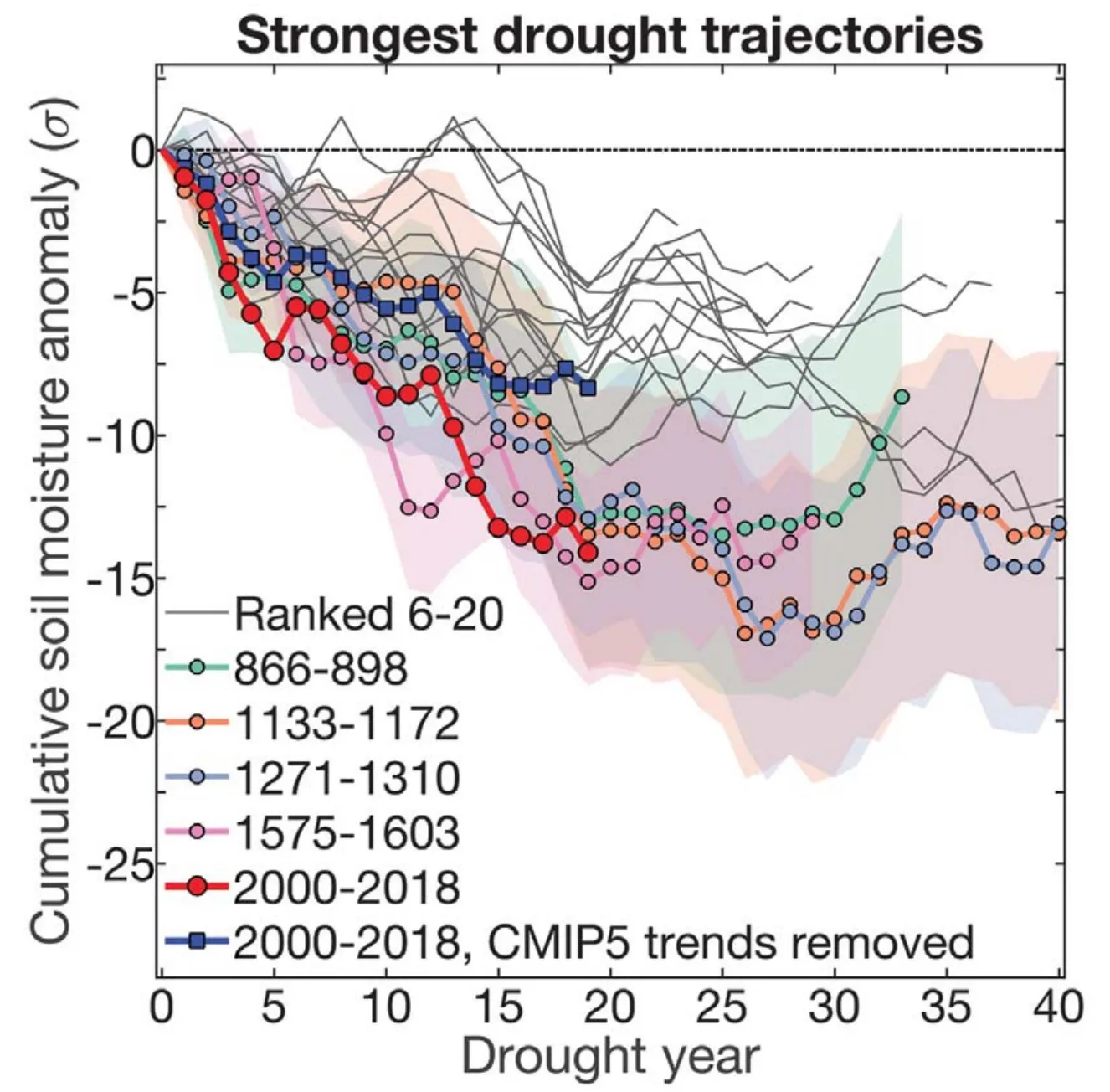
With the western United States and northern Mexico suffering an ever-lengthening string of dry years starting in 2000, scientists have been warning for some time that climate change may be pushing the region toward an extreme long-term drought worse than any in recorded history. A new study says the time has arrived: a megadrought as bad or worse than anything even from known prehistory is very likely in progress, and warming climate is playing a key role. The study, based on modern weather observations, 1,200 years of tree-ring data and dozens of climate models, appears this week in…
The Earth Institute is a remarkable place. I’ve been working here for more than 10 years and it is truly a place where you learn something new everyday. That’s entirely because of the people who make up this organization and their underlying dedication to helping solve some of the most complex issues going on. But who are all these people?
Altogether there are more than 1,500 people affiliated with the Earth Institute ranging from scientists, faculty, staff, and students of all levels. Not to mention the hundreds who have passed through here and continue to work with us. With that,…
For 10 years, central Chile has been gripped by unrelenting drought. With 30% less rainfall than normal, verdant landscapes have withered, reservoirs are low, and more than 100,000 farm animals have died. The dry spell has lasted so long that researchers are calling it a “megadrought,” rivaling dry stretches centuries ago. It’s not so different from the decade-long drought that California, some 8000 kilometers away, endured until this year.
By analyzing tree ring records, scientists have now found evidence that such tandem droughts are more than a coincidence: They are surprisingly common…
The year is 150 CE. It’s a humid summer day in Muyil, a coastal Mayan settlement nestled in a lush wetland on the Yucatan Peninsula. A salty breeze blows in from the gulf, rippling the turquoise surface of a nearby lagoon. Soon, the sky darkens. Rain churns the water, turning it dark and murky with stirred-up sediment. When the hurricane hits, it strips leaves off the mangroves lining the lagoon’s sandy banks. Beneath the tumultuous waves, some drift gently downward into the belly of the sinkhole at its center.
Nearly two millennia later, a team of paleoclimatologists have used sediment…
Europe’s Great Famine of 1315–1317 is considered one of the worst population collapses in the continent’s history. Historical records tell of unrelenting rain accompanied by mass crop failure, skyrocketing food prices, and even instances of cannibalism. These written records strongly suggest Europe’s Great Famine was caused by several years of devastating floods that began in 1314, but they can’t tell us how this flooding compares to historic averages, or its full geographical extent.
Now, new research using tree ring records confirms the historical data, showing the years of the Great…
About 400 million people could be at risk for flooding by the end of the century should the Greenland ice shelf continue to melt at its current pace, according to a new study.
The ice shelf, one of Earth's largest, is widely considered to be the largest annual contributor of water into the ocean, and it's expected to continue to be a major contributor to global sea-level rise in the future, according to the study, published in the journal Nature on Tuesday. Read More
The 2019 Fall AGU meeting is next week and there will be many presentations from our PaleoDynamics Group, affiliated colleagues, and collaborators. Below is a chronological list of all our activities.
In addition to the individual presentations, Smerdon and Ed Cook will also be convening the Climate of the Common Era session with co-coveners Kevin Anchukaitis and Kim Cobb. This will be the 10th anniversary of the session and also mark the last time that the current group of conveners will convene the session. Several retrospective talks will kick off the…